Who built the fleet?
Search suppliers by company, location or component. See the industrial network behind everything from propulsion to shipboard furnishings.
Explore the industrial base →
Behind thirty-one ships stood a shipyard, an industrial network and a new approach to building destroyers. Explore the documents and photographs that help tell that story.
Explore the 1973 Ingalls collection →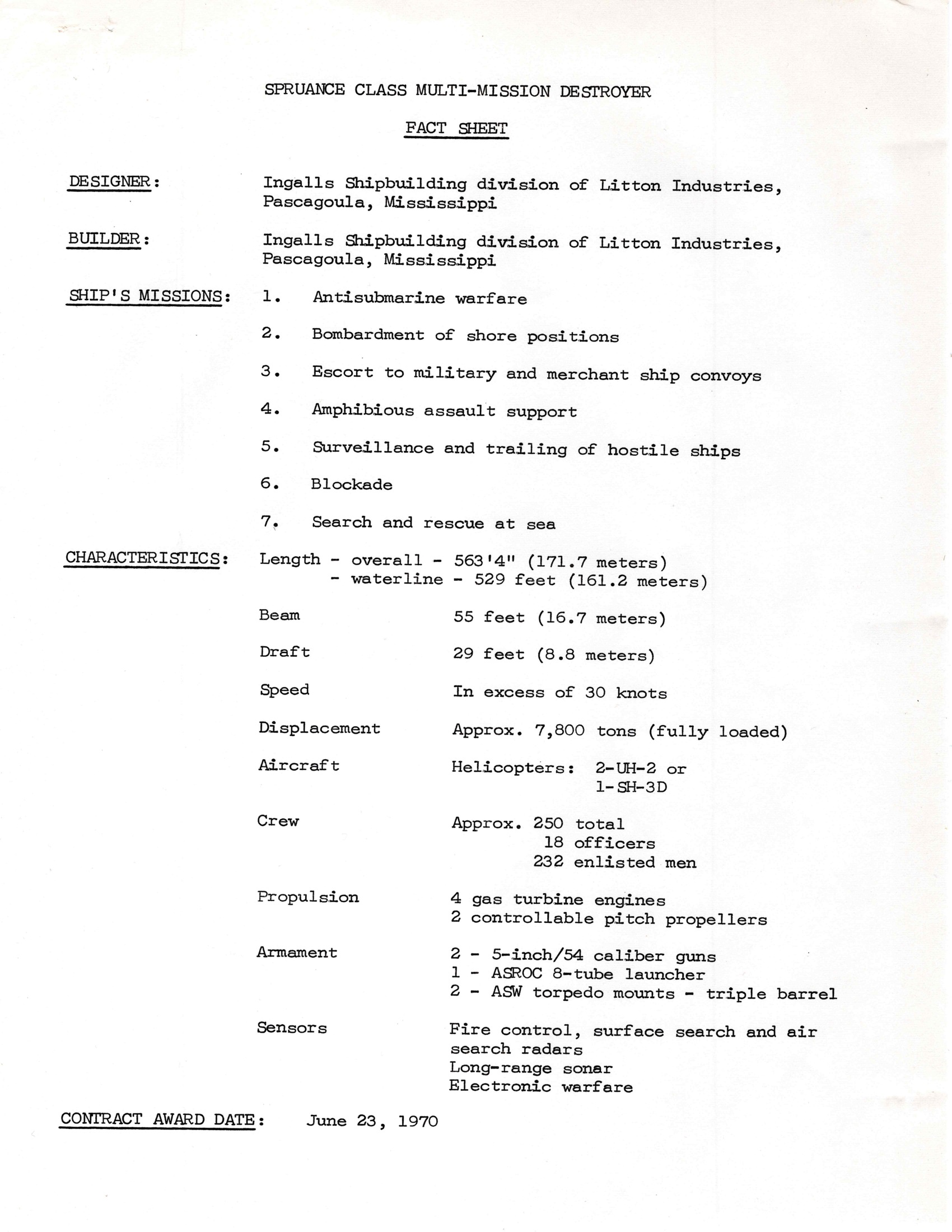
Issued around Spruance’s launch, this press kit describes the original 30-ship program: construction methods, combat systems, accommodations and the companies supplying the ships. Hayler, the eventual thirty-first ship, came later.
These are the builder’s contemporary specifications, expectations and claims. They are preserved as such—not presented as proof that every promise was fulfilled. Scans accompany the extracted information so you can examine the evidence yourself.
Search suppliers by company, location or component. See the industrial network behind everything from propulsion to shipboard furnishings.
Explore the industrial base →Follow the source’s account of modular construction, shore-based electronics testing and the shipyard’s launching system.
Examine the findings →Browse every supplied page alongside searchable corrected transcription. Original PDFs remain available for closer inspection.
Open the source collection →Later sources add context to the launch-era account. In November 1975, Litton engineering specialist Captain Frank Buckley identified the Command and Control Shore Station at Culver City, California, and described a January 1975 demonstration for Navy observers. His account supplies a useful location and testing lead, while retaining the perspective of a contractor participant.
Read Buckley’s contemporary account in USNI Proceedings
NARA’s September 2022 release list identifies eight boxes of Spruance acquisition-project subject files: RG 344, entry UD-07W 48, HMS record-entry ID 652243. Current access arrangements and a box list still need confirmation.
National Archives release list · PDF page 14
Follow the research leads →Collection notes: supplied scans are preserved without alteration. Transcriptions were checked against the scans on 24 September 2026; uncertain readings are flagged and original machine OCR is retained. Ownership of a physical document does not by itself establish reproduction rights. See the collection’s provenance and research notes for details.
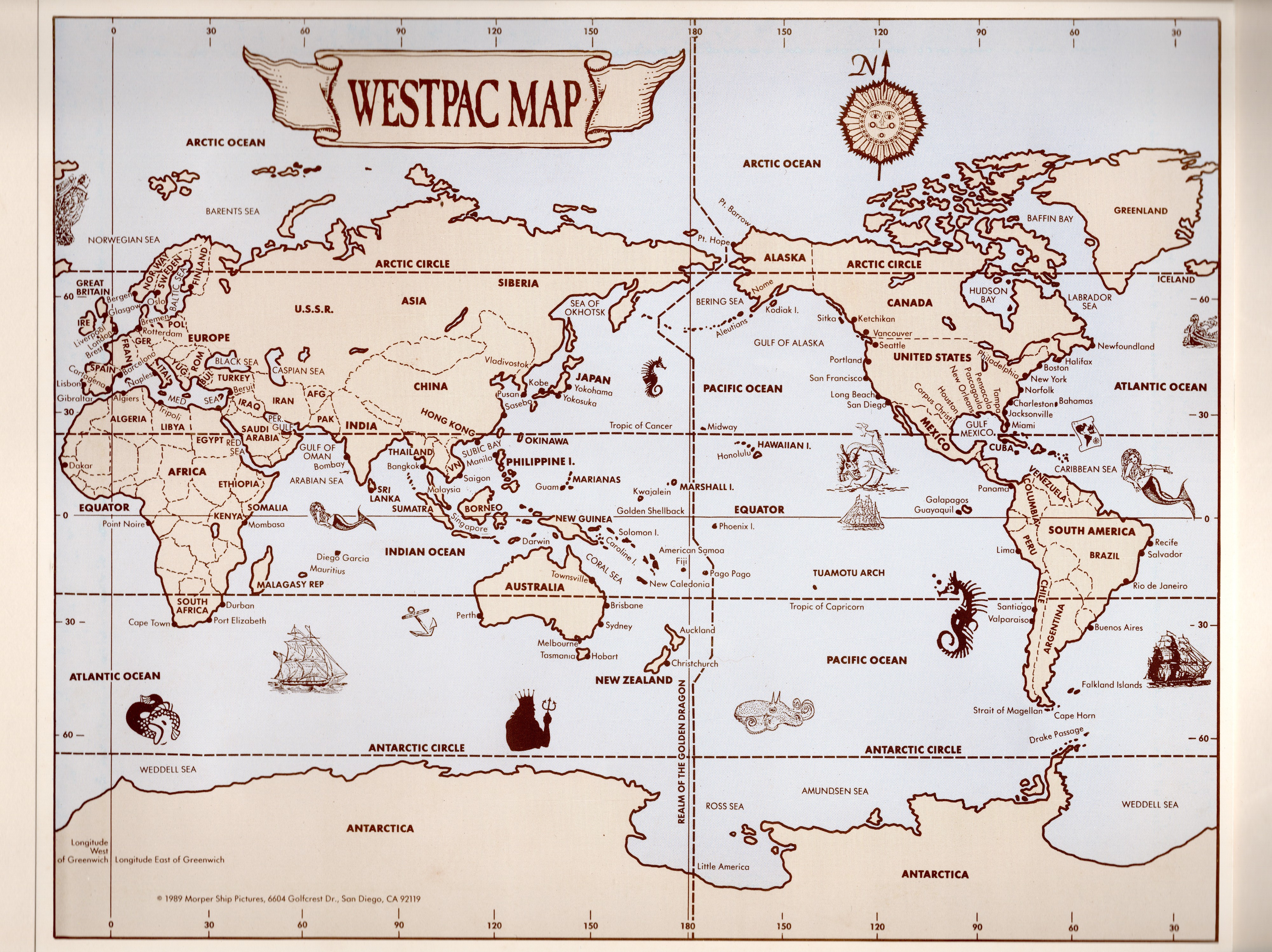
Explore 19 artifacts from the SPRUCAN collection: ship photographs, shipyard scenes, artwork, magazine covers and a WESTPAC map. View front and reverse scans together, with original markings, provenance notes and clearly identified open questions.
 Explore the photographic archive →